
 Max Heyraud
Just moments ago, Mixmag reported that Jordan Taylor, head of club culture documentation platform Tough Luck, has developed an app called Seen Live, which allows users to rate and review DJs they’ve seen.
Taylor told Mixmag that he wanted the app to be a place where people could “share their experiences of nights out and discover new artists through each other’s reviews.” But the initial launch has already attracted backlash, with some questioning whether it is yet another unnecessary layer of opinion in an already highly opinionated culture.
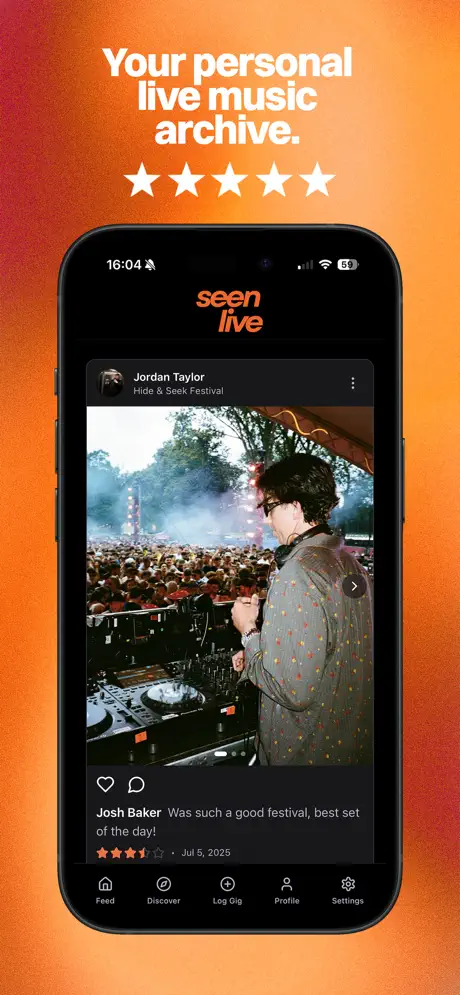
So, what’s the problem with reviewing DJs? We review films, albums, restaurants and hotels without much issue. But when you review a DJ set, and, by extension, a nightclub experience, you are often reviewing a person, not a fixed piece of work or a body of work that has been presented, recorded and fine-tuned. A DJ set is transient, contextual and inherently tied to the people in the room, the sound system, the crowd and the atmosphere on any given night.
The mechanics of Seen Live are yet to be fully revealed, but at first glance, it feels like a potentially uncomfortable addition to a scene whose online spaces have already been plagued by misogynistic and racist abuse directed at DJs. Giving people another platform to publicly score one another could easily become another avenue for tearing each other down rather than building community.
The app is partly framed around the idea of creating a personal archive, a place to “look back on everything, a proper archive of every show I’d ever been to.” And there is something genuinely appealing about that. Being able to document the nights you’ve attended, remember who played and discover artists through other people’s experiences could be useful. But there’s a bigger question about what happens when the archive becomes the experience.
Club culture has traditionally been built around conversation: discussing a set on the walk home, arguing about who played best, discovering an artist because someone wouldn’t stop talking about them. Those conversations happen in real time, between people who were actually there.
There’s a risk that turning those experiences into ratings and reviews simply moves that conversation from the dancefloor to the phone. In a culture already struggling with the effects of online discourse, is another platform for judging each other really what we need?
Seen Live could, of course, prove us wrong. It could become a valuable archive and a genuinely useful way of discovering DJs. But if club culture is about connection, spontaneity and shared experience, reducing those experiences to a number out of five feels like it could be missing the point entirely.
