
 Max Heyraud
This Saturday night, Izakaya will open its doors for the final time.
For decades, the George’s Street basement has been one of Dublin’s most important cultural spaces, a venue that shaped generations of DJs, dancers, artists and nightlife workers. Izakaya existed in its own world. A space removed from headliners, ticketed entry and the constant pressure of chasing whatever was considered popular. It operated by its own rules, giving local DJs the freedom to develop, experiment and find their sound.
The venue’s decision to book one act for the entire night created an increasingly rare environment. Those extended sets taught artists how to build a dancefloor from an empty room, how to pace a night, how to recover momentum and how to keep people engaged for hours. It was an education that happened naturally, week after week, in front of a real crowd.
That commitment to local talent became central to Izakaya’s identity. Its attention to curation helped establish the basement as a serious club space, despite not looking like one on paper. Seven nights a week, and in later years, with the upstairs bar becoming part of the experience, Izakaya maintained a level of consistency and respect rarely seen in Dublin nightlife.
People came there to party. Sometimes they arrived intentionally; other times, they hopped, skipped and jumped in search of a late-night ice-cold Asahi and ended up staying for the music. That unpredictability was part of the beauty of the space. It broke down barriers, and you never knew who you might bump into. You could only guess how many friendships and relationships began in that basement on George’s Street.
Following a long legal battle, that chapter is now coming to an end. As the venue prepares to close, we spoke to some of the DJs who helped soundtrack its story and create the community that made Izakaya such a special place.
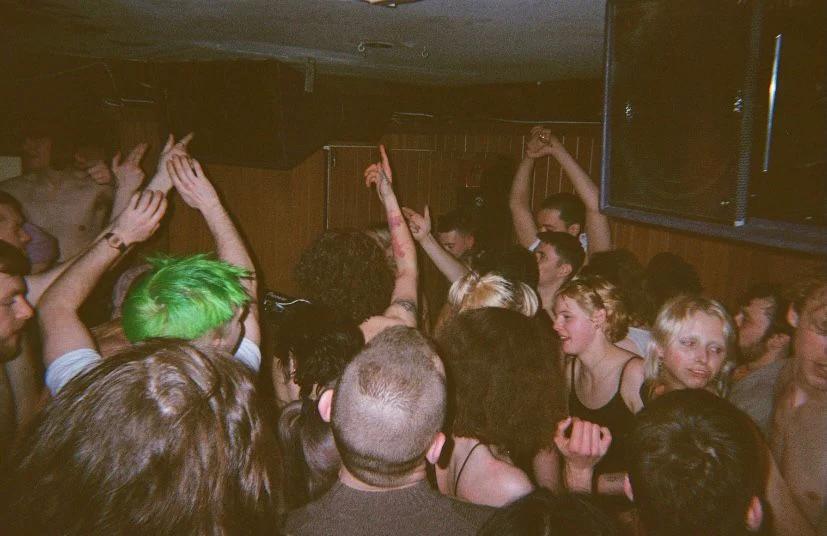
Rhyzine remembers Izakaya as one of the few places where DJs were truly allowed to grow.
“There is something special about walking into a small sweaty basement with electronic music pumping,” they say. “As both a DJ and a punter, it was one of the only places in Ireland where you could be treated to a four-hour set, which made it feel like an occasion.”
“I spent many nights on either side of the decks, supporting my DJ friends, learning from more seasoned DJs, as well as navigating my own first extended set,” Rhyzine explains.
“I did get a thrill from starting my first Izakaya set on a Wednesday night and being bumped up to Thursday, Friday and Saturday over time. This rite of passage will be sadly missed.”
Blewit believes Izakaya’s greatest achievement was the community it created.
“For me, Izakaya was one of those genuine safe spaces where, on any night of the week, you could pop in and see a face from every corner of Dublin’s nightlife scene and hospitality industry.”
“Izakaya is one of the few venues left in Dublin that gave DJs the opportunity to explore an open-to-close set. Four hours of experimentation and exploration. It gave grassroots movements and newly established collectives a chance. It was a place that gave the nightlife industry the opportunity to network and thrive.”
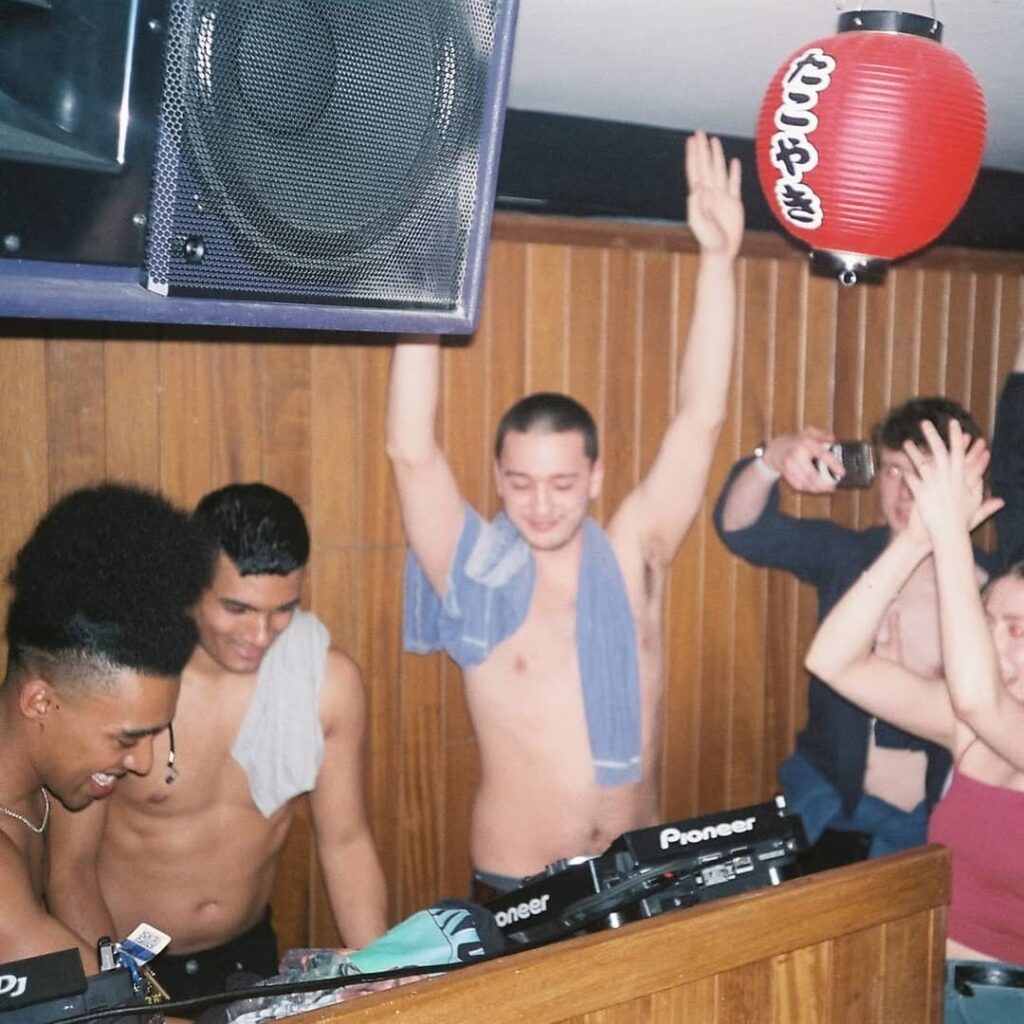
Sally Cinnamon, one of Izakaya’s longest-running DJs, remembers a venue where the community behind the bar was just as important as the music coming from the booth.
“I think I’m the longest-running female DJ on their rota,” she says. “It was very important, optics-wise, to belong somewhere as a girl in a really steady and fun peer group.”
She describes a place where staff, DJs and regulars quickly became a family.
“The bar staff and DJs were a tightly knitted pack of the funnest messers around town. It was kinda like Byker Grove with tunes and sushi. Derek was a legend and a visionary. He had huge faith in DJs, their style and their energy. Izakaya was somewhere I could mess around and practise. It’s where I cut my teeth when I crossed over from vinyl to USBs.”
For Collie, Izakaya represented one of the first places where experimentation behind the decks felt encouraged.
“It was one of the first venues that felt like it was okay to experiment behind the decks. Although the crowd were right in front of you, they tended to turn and dance to each other. Some would pour almost into the DJ booth, and you felt like you were in the crowd too.”
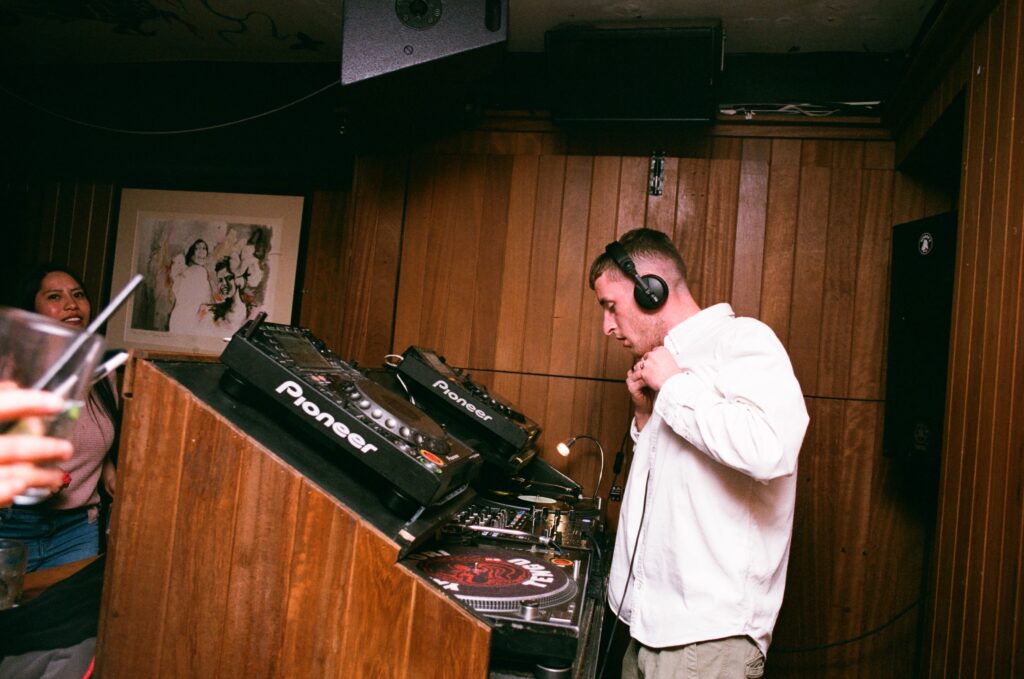
For George Feely, Izakaya’s strength came from knowing exactly what it was.
“No big acts, free in, amazing staff, a platform for local DJs, and one of the best basements in Dublin. It always knew exactly what it was and it never changed. It helped launch so many DJ careers and was simply a guaranteed good time no matter what day of the week you walked in.”
For Aldar Agd, Izakaya was more than a venue.
“The place was like a home to me. I’ve met all my friends in the Izakaya basement through the years. Local and international DJs, artists and promoters, staff and regular customers, a beautiful community that influenced me so much and paved the way for my DJ path later on.”

Jio believes Izakaya’s uniqueness came from a combination of factors that would be difficult to recreate.
“Izakaya just existed in its own world. So many people from other countries would say the same to me, even to the extent of lamenting not having their own Izakaya-style club in their own city.”
“A free-entry basement club that both DJs and punters treated like a club, and not a bar. Its acute attention to curation, especially when Conor Phelan was booker, meant it was respected like a club by everyone involved.”
“Those coming to attend wanted to come party, or even sometimes be persuaded after a few too many spicy Asians upstairs before descending on the madness in the basement. Basically, it was the club that wasn’t really a club, and all the better for it.”
Jio also gave a shoutout to the people who filled the room week after week.
“Shoutouts to Mick, Lucas and the rest of the basement dwellers we encountered there weekly over the years.”

Conor Phelan, one of the venue’s longest-running bookers, credits the vision and generosity of Derek Ryan, owner of Yamamori, for allowing Izakaya to become what it was.
“Izakaya basement was something truly special, a place that would not have existed without the vision and generosity of Derek Ryan, owner of Yamamori, who gave the team the space and time to develop their ideas within those four walls.”
He says the welcoming nature of the family-run business filtered through every part of the venue.
“Over the years, we’ve seen marriages, babies and friendships formed that will last a lifetime. For me, that is the thing that matters most in the world.”

For EMA, Izakaya was a place where confidence was built.
“Izakaya was the first venue that ever gave me the opportunity to DJ for four hours with full creative freedom. It taught me so much, helped carve my ability to pace and structure a set and helped build my confidence.”
“Its non-ticketed door policy meant the crowd was always diverse, loose and unpredictable.”
EMA played one of the final parties last week; she recalls: “Jio ended on Midland’s Final Credits and I cried looking around at the all-too-familiar bits and pieces that decorate the ground floor.”
This Saturday night, the doors close. But Izakaya’s influence will continue through everyone who passed through it. The DJs who found their sound there, the friendships formed downstairs, and the countless people who discovered a piece of Dublin nightlife that existed nowhere else.
