
 Max Heyraud
Bailey Ibbs reflects on momentum, creative risk, and a period of refinement that feels essential to his current identity as an artist.
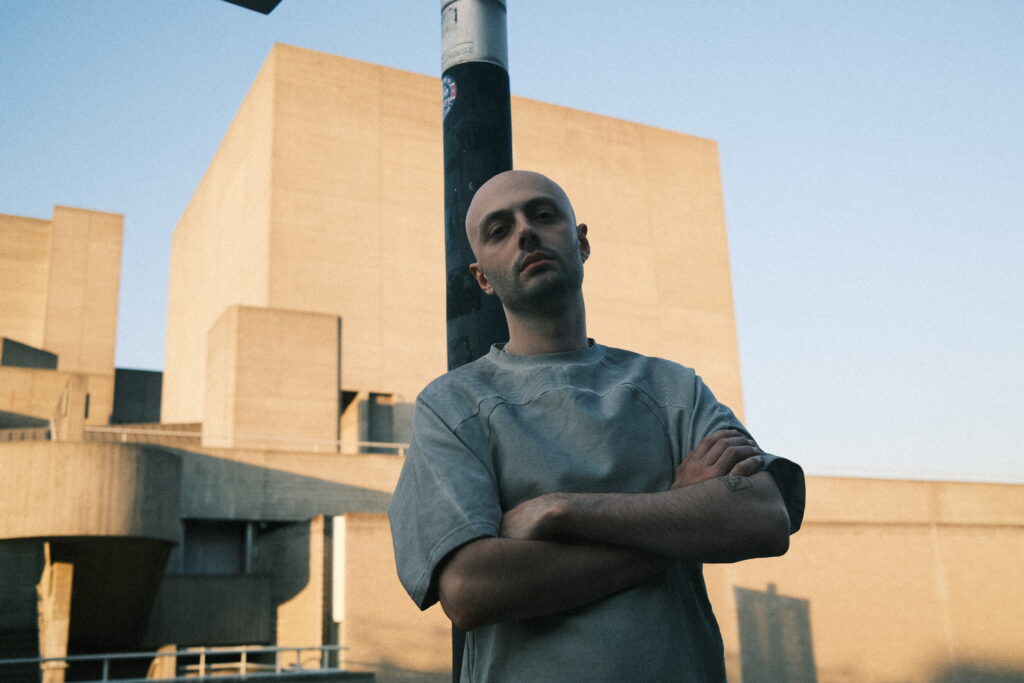
Bailey Ibbs has become an almost impossible name to ignore in the techno sphere of late. The London-based DJ, producer, label owner, and promoter wears many hats, quite literally, and has come to embody the capital’s ongoing techno resurgence. Not that London’s techno ever truly disappeared, but in recent years it has begun to rival its neighbouring European strongholds once again. If you’ve spent any serious time on a FOLD dancefloor, chances are high you’ve encountered Ibbs behind the controls at least once.
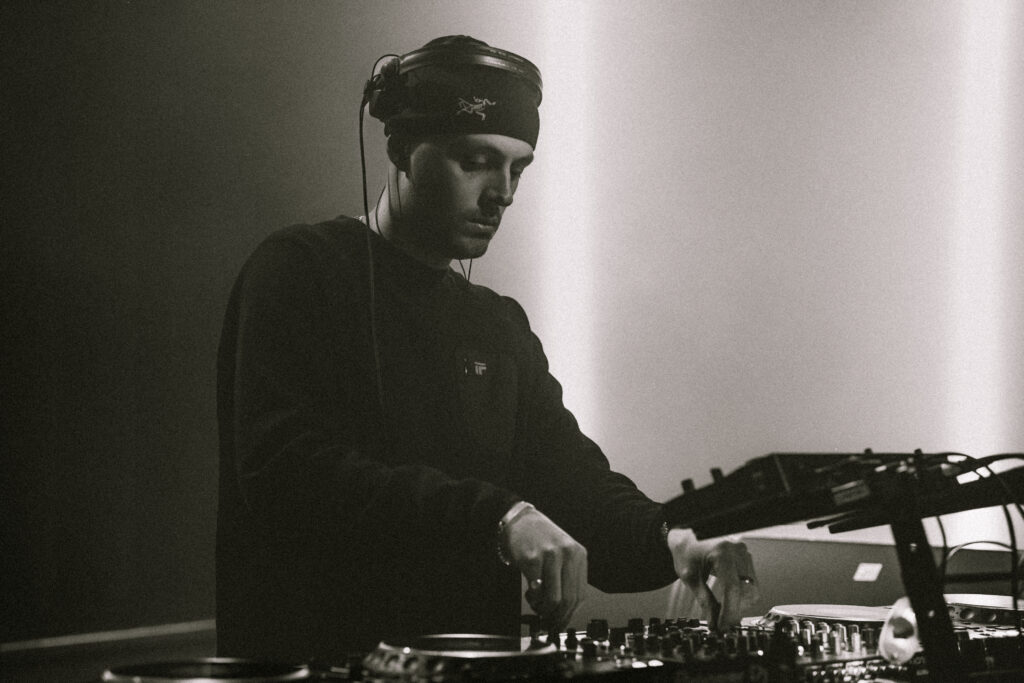
As a DJ, his broad-church approach to selection makes him an eclectic, occasionally mischievous presence. Best known for his distinctly “funky” strain of hypnotic techno, he’s equally admired for his willingness to throw curveballs, whether that’s house, garage, or something altogether unexpected, without ever breaking the flow of the room.
In the studio, Ibbs has taken a more heads-down, focused approach. His latest release on his own imprint, Night Service Records, feels like his most accomplished work to date: an amalgamation of deep, absorbing sonics shaped into a nuanced, restrained package that feels classic and timeless. The Tresor resident has managed to draw from a wide-spanning discography, from early forays into garage through to his present-day techno output, while keeping everything cohesive. Rather than feeling like a stylistic leap or forced reinvention, the project reads as the natural evolution of an artist in clear forward momentum.
Now, in 2026, it feels as though Bailey Ibbs is operating at his peak so far. His deep, focused approach in the booth, paired with an increasingly narrative-driven sensibility in his productions, points to an artist making statement after statement. And while he may now be something of a household name within techno, there’s a strong sense that this current chapter, refined, assured, and purposeful, may prove to be the most essential of his career yet.
You had a pretty big 2025, with a lot of touring and new music released. As we edge further into the new year, how are you feeling about where you’re at right now?
I’m feeling really good about it all, honestly. Very blessed to be in this position. I think what’s keeping me grounded is understanding just how much of an opportunity this is. It’s easy to get caught up in the momentum, but this year I’m really making a conscious effort to focus on my career properly and build on what I hope is becoming a strong foundation. It’s about being intentional with everything I do rather than just letting things happen.
Looking back, do you have any particular highlights from last year that really stand out?
The South America tour was massive for me. It felt like one of those proper “right of passage” moments as a techno DJ, if that makes sense. Playing out there, seeing how the crowds connect with the music, experiencing that crazy energy firsthand, it just hits differently. It’s one of those things you hear other artists talk about, and then when you finally do it yourself, you understand why it’s such a significant milestone in this scene.

How are you feeling about techno at the moment, especially in relation to the music that’s currently being released?
I feel like techno is in a really good place overall. It’s more accessible than ever, which is brilliant for bringing new people into the scene, but whether that’s entirely a good thing or not is up for debate. With more exposure comes more ‘sameness, I guess? It seems like a lot of people have their eyes on a select few artists, and everyone’s just trying to replicate their careers rather than experimenting and finding their own path, and the music’s becoming quite interchangeable because of it. I think everyone (including myself) is guilty of taking inspiration and maybe too much at times, but I’d really love to see more people taking risks and seeing what happens when they follow their own creative instincts instead of chasing what’s already proven to work.
More broadly, how do you feel about club culture and the club scene right now, the good, the bad, or anything in between?
Club culture is still alive and kicking, which is the main thing. A lot of credit for that goes to independent promoters who are taking punts on nights in places outside the major cities; those are the people keeping things interesting. In the big cities, though, you’ve got one or two promoters who basically have the monopoly, which can be a bit of a double-edged sword. On one hand, it’s not ideal for diversity, but on the other hand, as long as those promoters are booking diverse lineups and not just recycling the same DJs year after year, then we’re onto a winner. It’s all about how they use that power, really.
Are there any changes you’d like to see implemented within techno culture in general this year?
More experimentation and less fucks given. I think people are playing it too safe at the moment, and I’d love to see artists taking more creative risks without worrying so much about whether it’ll land or not. That’s where the magic happens.
You’re a Tresor resident, which is a huge honour for any techno artist. How did that relationship come about, and what does the club mean to you personally?
Being a resident at Tresor is honestly the biggest honour. This is the club with the deepest history in Techno, the one that’s remained closest to the roots in Detroit, and they’ve trusted me with that legacy. I can’t overstate what that means to me. Tresor was actually the first techno club I ever went to back in 2018, so there’s this full-circle moment to it all. Walking into that space as a punter for the first time absolutely changed my perspective on what techno could be and what club culture meant.
Now, being in a position where they’re confident enough in my taste to let me get stuck into the curation side of things, to really showcase what I believe in musically, it means the absolute world to me. It’s not just about playing there; it’s about being trusted to contribute to what makes that club special. Every time I’m there, I’m aware of the weight of that history, and it pushes me to bring my best and honour what that space represents.

Let’s talk about your latest EP, Notice The Silence. Excellent work, big ups. It feels very considered and slightly personal. Would you say that’s a fair assessment?
Yeah, totally. That’s exactly what I was going for with this one. I really tried to create an EP that came from a deeper place emotionally, rather than just trying to make ‘bangers’ for the club. Don’t get me wrong, I love a proper banger, but with this project I wanted to explore something a bit more introspective and vulnerable. It felt like the right time to go there and show a different side of what I’m about musically.
The press release mentions that you’re “embracing the weight, fragility, and clarity that come with stillness.” Can you expand on what that idea means to you?
To me, it means fully allowing my emotions to be shown in my music without filtering them or making them more palatable. Instead of focusing purely on energy, grooves, and catchiness, which obviously have their place, it was more about remaining true to whatever feeling was coming through, no matter what that looked like sonically. Sometimes the most powerful moments in music come from restraint and space rather than constant intensity. I wanted to sit with those quieter, more fragile emotions and let them breathe in the music rather than covering them up with relentless energy.

You originally came from more of a house and garage background, something you still draw from today. When did a clear directional shift toward techno begin to take shape for you?
I get asked this all the time! The thing is, I’ve always been into Techno from when I first discovered electronic dance music, and I’ve always tried to create it. I just found that UKG came easier to me earlier on in my production career; it clicked faster, I guess. It wasn’t until around 2021, just after lockdown in the UK, that I started feeling like the parties I was playing weren’t really resonating with me anymore.
At that point, I’d played one or two techno nights and felt like that was a much more natural environment for me. The energy, the crowds, the way people connected with the music, it all just made sense. So from then on, I decided that’s the direction I wanted to fully commit to. It wasn’t so much abandoning one thing for another as it was finally allowing myself to fully pursue what had always felt right.
I think it’s actually healthy for DJs to come from various genres and carry those influences forward. It feels apparent in how you DJ, sometimes playful, while still holding tension. Is that a fair assessment of your approach?
Yeah, I’d say that’s pretty spot on. I always enjoy incorporating those old influences into my sets whilst mixing, but my main objective is to encourage the crowd to join me on the journey I want to go on myself. That can sound quite selfish when you put it like that, but I genuinely feel like the role of a DJ is to influence people into dancing and experiencing music they might not necessarily listen to on their own. It’s about showing them something new, taking them somewhere unexpected, and hopefully expanding what they think techno can be. The playfulness comes from those other genre influences, but the tension is pure techno; it’s finding that balance that keeps things interesting.

How’s the London techno scene feeling at the moment? From the outside, it seems to be in a really positive place.
London’s in a great place at the moment, honestly. Of course, we’ve got Fold, which is world-renowned at this point and absolutely deserves to be. Fabric is still going strong after all these years, which is a testament to what they’ve built. And now we’ve got SECTION., which is this fun and exciting streaming platform run by close friends of mine, bringing some of the most exciting names in not just techno but all genres. You’ll usually find me there if they’re streaming on a Thursday! The energy in London right now feels really healthy, like there’s space for different flavours, which is what makes it the best city in the world.
You’re playing in Belfast soon. What can people expect from that set?
I’m buzzing for it! I’ve always loved playing in Ireland; the crowds there are probably some of the most receptive I’ve experienced anywhere. There’s just this openness and energy that makes every set feel special. You can expect a fun, lighthearted set with lots of groove. I want people to be dancing and smiling, taking them on a journey, but keeping it joyful throughout.

Finally, do you have any words of wisdom for up-and-coming techno artists?
Good artists copy, great artists steal. I can’t remember who said it, but I feel there’s some truth to it. Replicate your favourite productions until you really understand what it is about them that ticks for you, then take that knowledge and put your own spin on it. That’s how you develop your sound. But here’s the other big one: nobody booked me or released my music until I did it myself. You’ve got to build your own ecosystem and not rely on others to make things happen for you. Put out your own tracks, throw your own nights, create your own opportunities. Once you start building that momentum yourself, that’s when other people start paying attention.
