
 Max Heyraud
Jenny reflects on the early days of finding community through music, the realities of building a career across radio and DJing, and the shifting relationship between audiences, technology and club spaces.
Over the past 20 years, Jenny Greene has been one of the defining voices in Irish electronic music, straddling club culture and national broadcasting with ease. From her early days DJing in Dublin and cutting her teeth on pirate radio to becoming one of RTÉ 2FM’s most recognisable presenters, she has helped shape how dance music is heard and understood in Ireland.
Best known for Electric Disco, her long-running Saturday night show that introduced generations to house, techno, and club culture, Greene has also played a central role in bringing electronic music to the forefront of Irish culture. From regularly performing on festival main stages to collaborating with the RTÉ Concert Orchestra, she has consistently helped expand where and how dance music can be experienced. Alongside that, her broader ethos has been rooted in not only championing electronic music, but also supporting the next generation in building a sustainable and viable ecosystem within the scene.
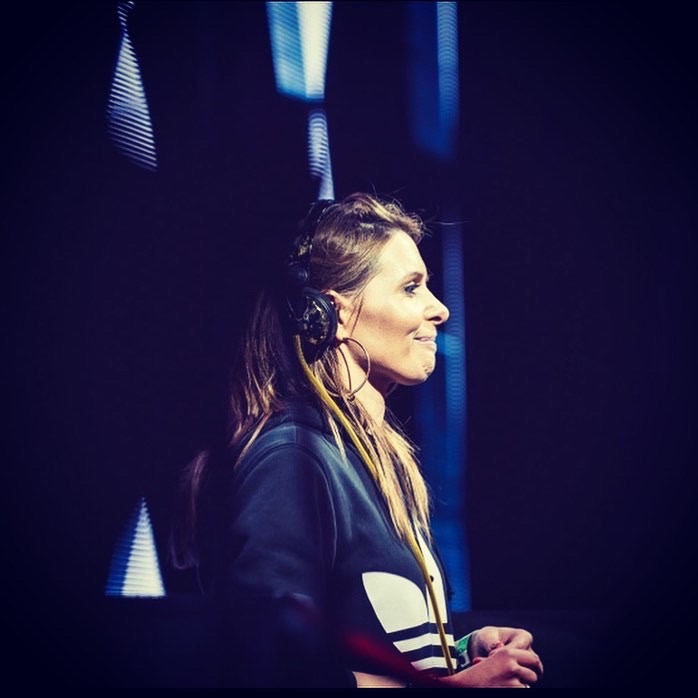
You started DJing at quite a young age in Dublin. What drew you into that world in the first place?
I was obsessed with music from a really young age. My parents always had music on in the house, I remember getting my first HiFi with a record deck & spending hours making up mix tapes. My first love was hip hop but then dance music took over when I was about 12.
Growing up in Dublin in the ‘90s was an exciting time. The city had this incredible energy and there were clubs and DJs creating experiences that felt completely different to anything else. We were fortunate to have had some of the best clubs in the country. It’s hard to describe the atmosphere of places like POD, Redbox or The Temple Theatre in the late 90’s. We also had some incredible DJs, I don’t remember huge names being flown in regularly; we had our own. The likes of Johnny Moy, Mr Spring, Mark Kavanagh, Orbit, Keno Flanagan, Darren Flynn and Pressure were packing out venues every week.
At that time, was it clubs or radio that came first for you, and did you find those two spaces informed each other, given they require quite different skill sets?
The clubs definitely came first. DJing was always my first love and radio happened because of that rather than the other way around. I learned so much from playing to people in clubs because you quickly understand that reading a room is everything. You can have the best records in the world, but if you don’t know when to play them, they won’t connect.
Radio taught me something completely different. You’re talking to one person at a time rather than a packed dancefloor. It made me think more deeply about the stories behind the music and gave me an opportunity to champion artists people might never have discovered otherwise. They’ve always fed into each other. Clubbing keeps my radio show fresh, and radio constantly introduces me to music that eventually finds its way into my DJ sets.
Club culture and dance music are so accessible now and very much part of the mainstream. When you were coming up, did it feel much more underground, like you had to actively seek out records, parties, and communities?
Absolutely. There wasn’t an algorithm recommending music to you. You had to work for it. You’d spend hours digging through records in Abbey Discs or Tag, talking to other DJs, reading magazines and going clubbing every weekend. If somebody had an amazing record, you often had no idea what it was because Shazam didn’t exist. I remember calling into Shane in Purple Moon Records the weekend before I was due to play Homelands and he’d made up a little bag of records for me. One of the ones he pulled out I hadn’t heard yet & he just said ‘trust me this is gonna be huge’! I opened with it and he was bang on, it was an early pressing of Black Legend ‘You See The Trouble With Me’.
That made every discovery feel really special. I think that’s something we’ve lost a little. Music is much easier to access now, which is brilliant in many ways, but I still think there’s something incredibly rewarding about discovering a record yourself after a bit of digging.
You’ve spoken before about leaving school early and not doing your Leaving Cert or going to college. Did that make music feel like your only real path, and did that focus you in a different way?
It probably did. At the time I didn’t have some grand masterplan, I just knew that traditional education wasn’t where I felt I belonged. Music was the only thing I really loved.
I wouldn’t necessarily recommend my route to everyone because education is hugely important, but for me it meant there wasn’t really a Plan B. I threw absolutely everything into DJing and eventually radio because I had to make it work. Looking back, I think that single-mindedness probably helped. When you genuinely love something, putting in the hours never really feels like work.
You’re predominantly known as a major figure in Irish broadcasting. When you first got into radio, did you ever imagine it could become a long-term career?
Not at all. I genuinely thought I’d maybe do a few shows and see where it went. If someone had told me I’d still be here nearly two decades later, I would never have believed them.
Radio has given me opportunities I could never have imagined. I’ve been able to introduce listeners to artists before they’ve become huge, broadcast from incredible festivals and clubs, and still share new music every single week. That’s something I never take for granted and even after all these years I still love what I do.
Electric Disco is about as iconic as Irish dance music radio gets. Are you aware of the impact it’s had on electronic music in Ireland, and is that something you can fully take in?
It’s actually quite difficult to take in because when you’re doing the show every week, you don’t really think about it. It’s only when people come up to me years later and tell me they discovered a particular artist through the show, or that it inspired them to become a DJ or producer themselves, that you realise the impact it had. The Electric Disco also changed a lot over the years. When it first started, it was a dance classics show, and in 2009 I released an Electric Disco album featuring some of the classic tracks I had been playing on the show. As the years went by, though, I felt the show needed to evolve, so I started introducing a few new tracks each week. At first there was a bit of pushback from listeners who wanted to keep it old, but over time I started playing only new dance music, and with that came a whole new audience.
By the age of 21, you set a Guinness World Record for the longest DJ set. Where did that idea come from, where was it, and how long did you end up playing for?
I was young enough to think it sounded like a brilliant idea! Looking back, I don’t think I fully appreciated what I was taking on. It took place in Dublin and I ended up playing for 75 hours straight.
It became much more of a mental challenge than a physical one. There are moments where you’re exhausted, but the crowd keeps you going at night, daytime when the venue was empty was more of a struggle, but I have to hand it to my mum she stayed with me throughout the entire event. It’s definitely not something I’d rush to do again, but it was an amazing experience & I have a Guinness World Record hanging on the wall at home.

You’ve mentioned in interviews that you still get nervous before gigs after more than 25 years; what is it that still brings those nerves on?
I think it’s because I still care. The day I stop getting nervous is probably the day I should stop DJing.
Every crowd is different. You can prepare all week, have a rough idea of where you’re going with the set, but until those first few tracks go down, you don’t know exactly where the night is going to take you. Those nerves disappear quite quickly once I’m into it, but I actually think they’re healthy.
You’ve also been quite outspoken about phones at raves; have you noticed any shift or improvement in audience behaviour over time?
I think people are becoming more aware of it. There seems to be a growing appreciation that some moments are better experienced than documented.
I’m not against phones completely. We all love having memories. But when every single person is watching a DJ through a screen, it changes the atmosphere. I miss the days when the DJ wasn’t the focus. The best dancefloors are the ones where people are completely present, connecting and the music rather than worrying about creating content.
Your collaboration with the RTÉ Concert Orchestra was a really striking crossover. How did that project come about, and what was the experience like for you?
It was one of those opportunities that sounded almost too ambitious when it was first suggested. Dance music and a full orchestra don’t immediately seem like obvious partners, but when you really listen to the emotion and composition behind so many electronic records, it actually makes perfect sense.
Standing on stage with the RTÉ Concert Orchestra was one of the proudest moments of my career. Hearing music I’d loved for years interpreted by world-class musicians was incredibly emotional. It also introduced a lot of dance fans to the RTÉ Concert Orchestra and vice versa. I just loved watching the Orchestra react to the crowd.

As someone who’s been a fixture in Irish electronic music for decades, how do you feel the general perception of dance music has changed over that time, especially compared to when there may have been more stigma around it?
It’s changed enormously. When I started, dance music was often dismissed as repetitive or seen as something that only belonged in clubs. People didn’t always recognise the artistry behind it.
Now it’s rightly respected as an incredibly broad genre with amazing producers, composers and live performers. Festivals celebrate it, orchestras perform it, and universities study it. It’s finally getting the recognition it always deserved.
You’ve been increasingly spotlighting younger Irish talent in recent years; why is supporting the next generation of electronic music here important to you?
Because a lot of people gave me opportunities when I was starting. I remember Paddy Sheridan bringing me into Redbox one night & letting me play some records while people were filtering in. Getting to warm up for Jay Pigeon, Darren Flynn & Orbit down in the Temple Theatre back in the day. They always kept an eye out for me & some of my best memories are with them. Ireland has an unbelievable amount of talent, but sometimes people just need someone to open a door for them.
Radio gives me a platform to do that. There’s nothing better than playing a new Irish producer for the first time and then watching their career grow. I remember getting sent an edit of Chicane ‘Saltwater’ by a young DJ from Donegal called Reuben Keeney, who we now all know as Rebuke. If we don’t support our own artists, who will?
If you had to step away from DJing tomorrow, what would you want your career and contribution to be remembered for?
I’d love to think people would say she was honest and played music she genuinely loved.
Success comes and goes, but music stays with people. If I’ve played a small part in somebody falling in love with dance music, discovering an artist that changed their life or creating unforgettable nights on dancefloors, then that’s more than enough for me.

You’re bringing the Balearic sound to the Olympia on September 12th. How important has the Balearic influence been in shaping your sound and the way you approach DJing?
It’s probably influenced me more than any one genre. Balearic isn’t really about tempo or style; it’s more of a feeling. It’s the first time you experienced the glory days of Ibiza. That moment you set foot in Manumission or danced on the Terrace at Space.
As I’ve got older, I’ve become much less interested in sticking to one lane. I want people to come away feeling like they’ve been on a journey rather than hearing two hours of the same thing.
The Olympia is such an iconic venue, but it’s also a space with huge potential as a club room. How exciting is it to bring a club-style event into such a prestigious setting?
It’s incredibly exciting because people normally associate the Olympia with concerts or theatre. It’s one of those venues that’s instantly special the moment you walk through the doors.
The idea is to transform it into a proper club for one night. It’s such a beautiful room and I think it’s going to create a really unique atmosphere.
You’ve chosen to play an all-vinyl set for the night. What made you decide on that format?
Vinyl slows you down in the best possible way. You can’t carry thousands of tracks, so every record has to earn its place in the bag. That means you make different decisions and often take more chances.
There’s also something incredibly satisfying about the physical connection with the music. Pulling out a record you’ve owned for twenty years and giving it another life on a great sound system is a feeling that never gets old. It’s not about nostalgia; it’s simply a different way of performing that suits this kind of night perfectly.
Joining you on the night is one of our favourites, Collie. What made him the right choice to support this show, and what do you think he’ll bring to the overall journey of the night?
Collie was an obvious choice because he’s a proper selector. He’s never been interested in following trends or chasing the obvious records. He digs deep, he understands how to build a set, and he genuinely loves music.
That’s exactly the energy I wanted for this night. I don’t see support DJs as warm-up acts; they’re responsible for setting the entire tone of the evening. It’s arguably the hardest slot of any night. I know Collie will create the perfect atmosphere, and by the time I come on, the room will already be exactly where it needs to be.
