 Max Heyraud
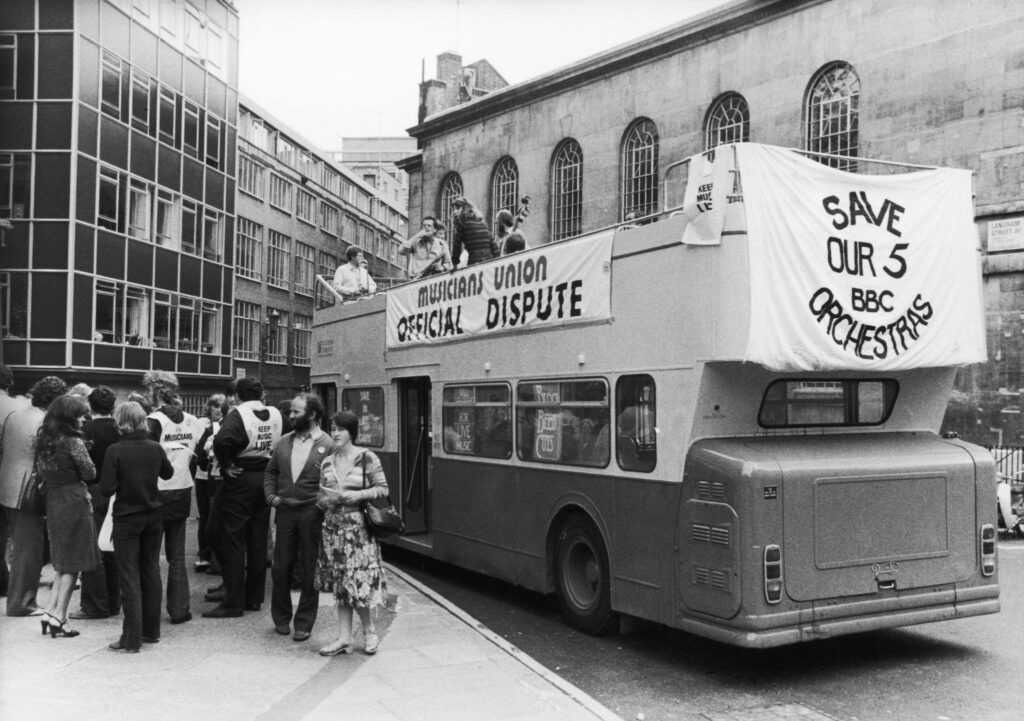
On this day, 44 years ago, the Musicians’ Union tried to ban synthesisers and drum machines, arguing that they would replace session musicians, drummers and orchestral players with programmable machines.
The debate around the controversial motion passed by the UK’s Musicians’ Union was still rippling through the music industry around 15 June 1982. Just weeks earlier, delegates had voted in support of measures opposing the growing use of synthesisers, drum machines and other electronic instruments, arguing that the technology threatened the livelihoods of working musicians.
Across Britain and Europe, synth-pop was becoming a commercial force, and synthesisers in general were becoming increasingly common in popular music. Affordable instruments from Roland, Sequential Circuits and Korg were moving out of professional studios and into bedrooms, rehearsal spaces and independent record labels. Producers were also discovering that drum machines offered not just cost savings, but entirely new approaches to rhythm and composition.
The main concern from organisations such as the Musicians’ Union was that synthesisers and drum machines were replacing human performers. In hindsight, it’s an ironic position. These instruments proved remarkably poor at replicating traditional musicians, but they went on to change music forever because they sounded different. Rather than replacing existing instruments, they created entirely new musical possibilities and helped give birth to genres that would have been impossible without them.